A Film?
How the Idea Began
The idea didn’t come from a storyboard or a pitch — it grew in the quiet spaces between photographs. The moments no one plans for.
During shoots, I began noticing the in-between: the meals crowded around a table, the way a voice softened on the porch at dusk, the unguarded laughter when the cameras were off. These were the moments when performance dissolved, and something real took its place.
“I want to capture that,” I thought. Not just the light, the composition, the art — but the way people unbecome when they think no one is watching.
The Method: An Unseen Witness
I left small DJI cameras in the models’ shared rooms.
“Use it when you feel like it,” I told them. “Tell your story. Interview each other. Record the things you think no one sees.”
I was never present for those conversations.
I only overheard fragments — like the morning one model whispered to another before picking up the camera: “Say only what you feel saying.” And then, the silence afterward. Not awkward. Just allowed.
The Stories That Emerged
Later, alone with the clips, I began to understand the weight some of them carried. The things they’d survived — not with bitterness, but with a quiet defiance.
There was no self-pity in their voices. No plea for sympathy. Just the steady retelling of lives shaped by hardship yet unbroken by it.
And that’s when it hit me: these weren’t just stories of suffering. They were acts of resistance.
What could have turned them cruel, or hardened, or closed-off, had instead made them kinder. More open. More alive to the pain of others. That’s not tragedy. That’s a kind of heroism.
The Nudity, the Vulnerability
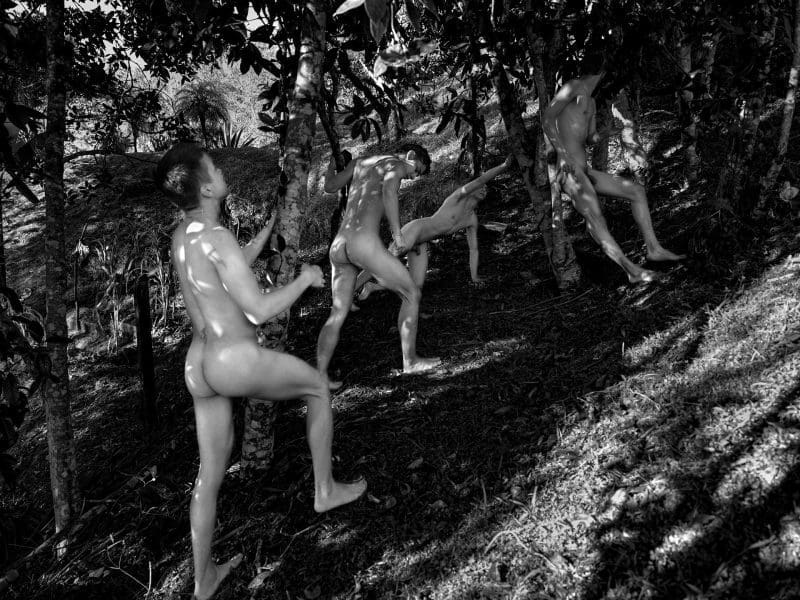
Yes, some scenes involve nudity — as in my photography — but never for provocation. It’s there in the same way a scar is: as proof of living.
A body is not just a shape to be lit beautifully; it’s a map of what a person has endured.
The Night It All Clicked
I remembered Suesca. The last night at the hacienda, when Andrés — who had barely spoken all week — rose to his feet at dinner. His hands trembled as he handed me his phone. On the other end, his mother’s voice: “Gracias por la oportunidad que le diste a Andrés.”
I have never forgotten those words.
Then Andrés looked at me and said, “I’ve never felt part of something before. Not judged. Not othered. Just… accepted.”
In that instant, I understood: the real story wasn’t in the photographs.
It lived in the space between them.
Why This Must Be a Film
Because these moments are too fragile to exist only in memory.
Because the world needs to see that resilience doesn’t always roar — sometimes, it’s the quiet act of showing up, unguarded, despite every reason not to.
Because these people — these beautiful, unbroken people — deserve to be witnessed.
Not as subjects.
But as human beings.
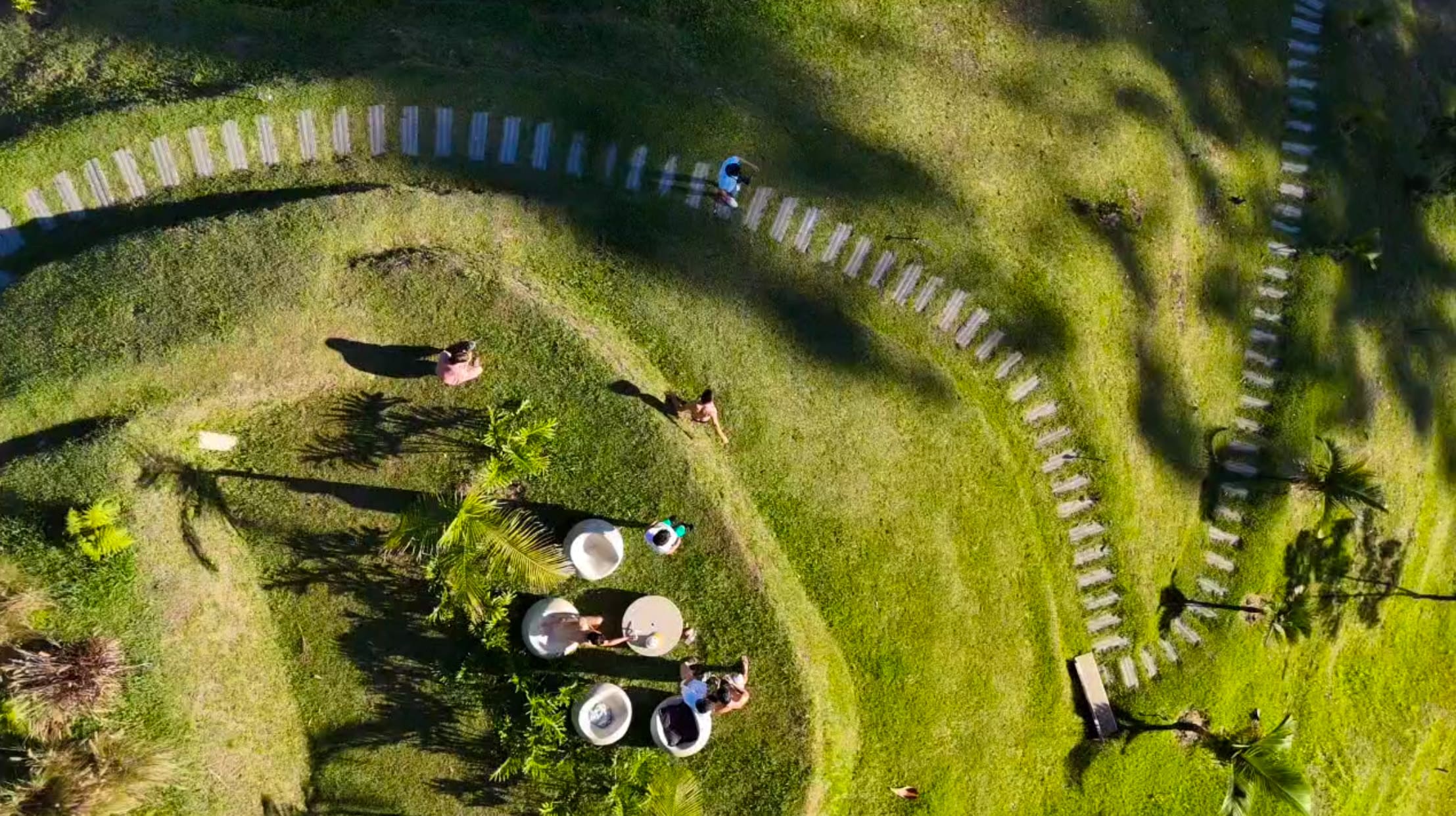
[2025 – Guatapé: Aerial View of the Crew at the Lakeside Villa]