Archaeology of Future Ruins
The Proto-Digital Proletariat
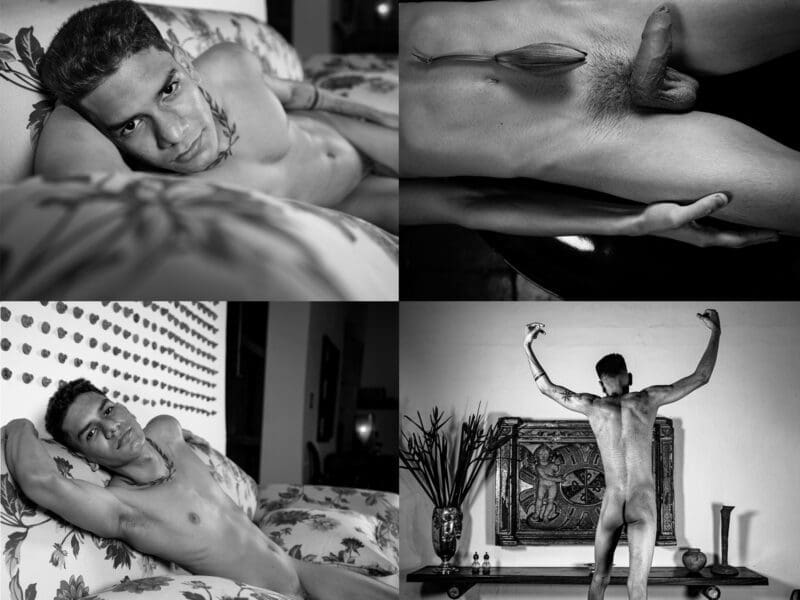
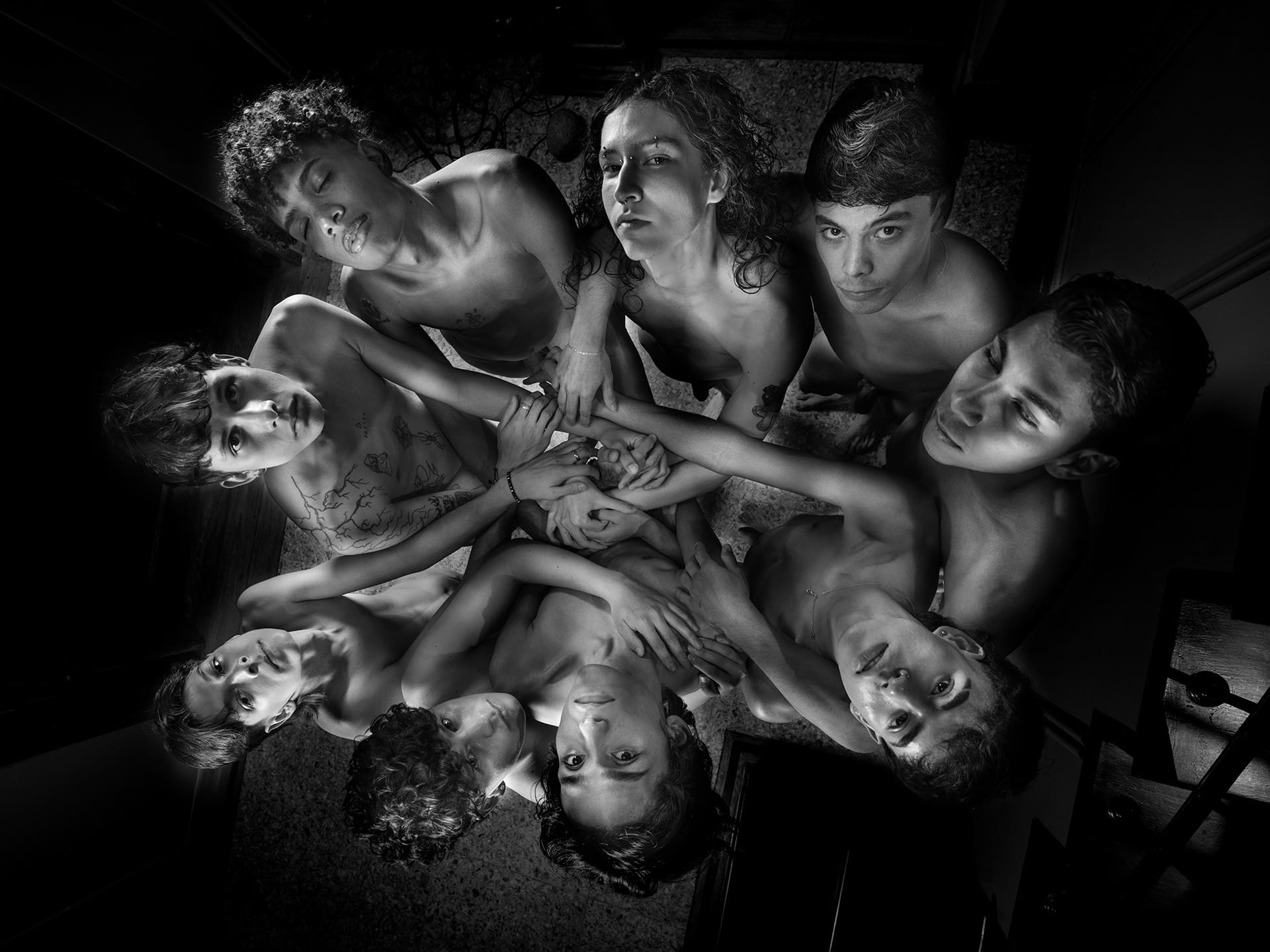
Sometimes I think my models belong to a “proto-digital proletariat”: young men raised in a world where nudity is no longer taboo but currency, translated into tokens and likes on webcam platforms. A hyperconnected global underclass that has turned the body-image into its only capital in the ruthless economy of attention. This is not a matter of geography but of a generational and cultural condition that crosses borders—wherever the body becomes the first coin of exchange in the digital arena. When I meet them, I state it clearly: I am not interested in the performance the market has taught them—the simulation of desire reduced to a trade. The miracle is that, once that commercial habitus is suspended, something else comes through. What I seek is the fragile space that exists before or beyond performance: a truce where trust frees the body from prefabricated scripts and makes it available to a new language. Perhaps this is why they strike me as extraordinary: they have already passed beyond the bourgeois “fear of nudity.” They no longer live it as scandal or as weapon; they have dismantled it, turned it into a tool. This forced desacralization opens them to a gaze that does not buy, but observes. Their spontaneity is no longer “natural” in any naïve sense, but translates into a clear, disenchanted simplicity. I call this condition a “digital proletariat,” to distinguish it from Pasolini’s. The kinship I feel is strong, but one of contrast. Pasolini sought in the ragazzi di vita a pre-bourgeois vitality, a body still intact, pagan, capable of resisting the homogenization of consumer society. My models, instead, are born already inside commodification. Their authenticity is not untouched virginity but a survived resistance: they have endured falsification to the very end and, in a moment of grace, reveal what remains alive within it. Here lies the secret correspondence: both kinds of bodies guard a radical truth that escapes bourgeois superstructures. Pasolini loved bodies the powers had not yet shaped; I am drawn to those shaped to the extreme, yet still able—in a suspended interval—to disclose an irreducible core of humanity. My gaze is not sociological. It is that of an artist, using the Pasolinian analogy as a poetic lens—perhaps distorting, but also revealing. I do not try to document reality; I try to question it. And I do so as an archaeologist of future ruins: sifting through the hyper-commodified debris of the present to find fragments of a true gesture in a world of copies.