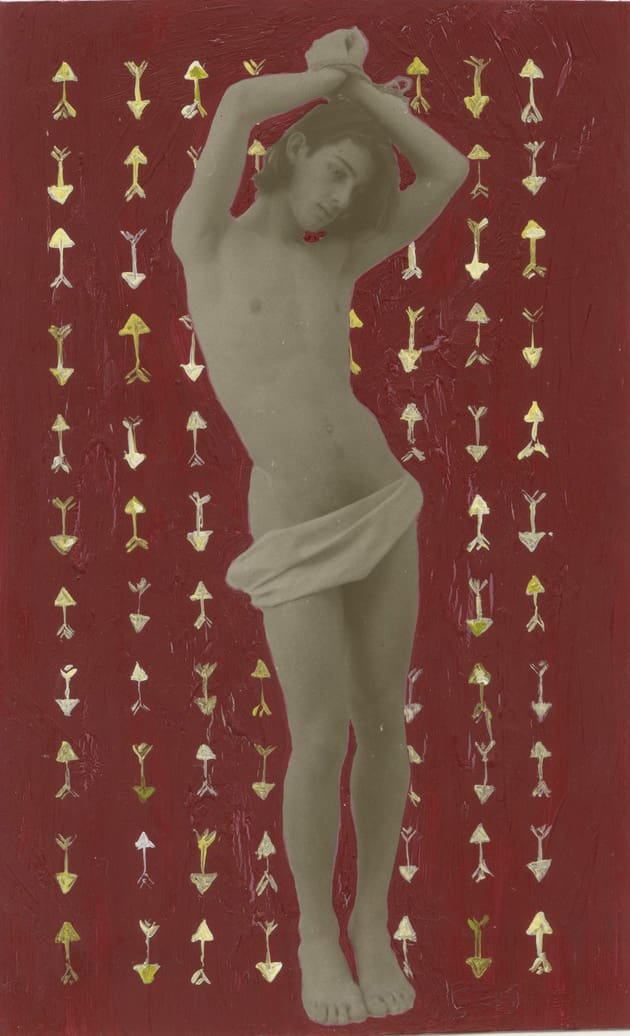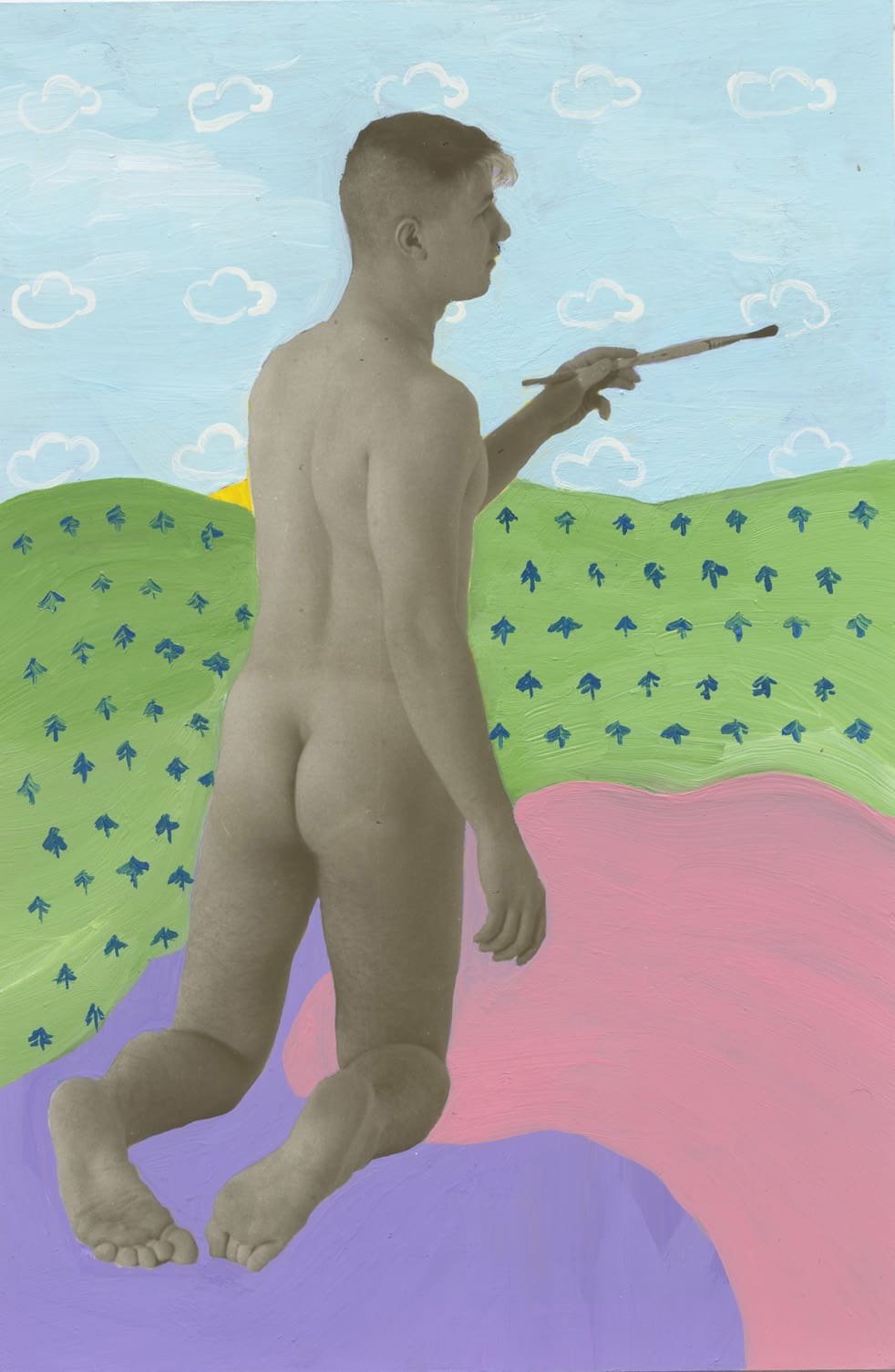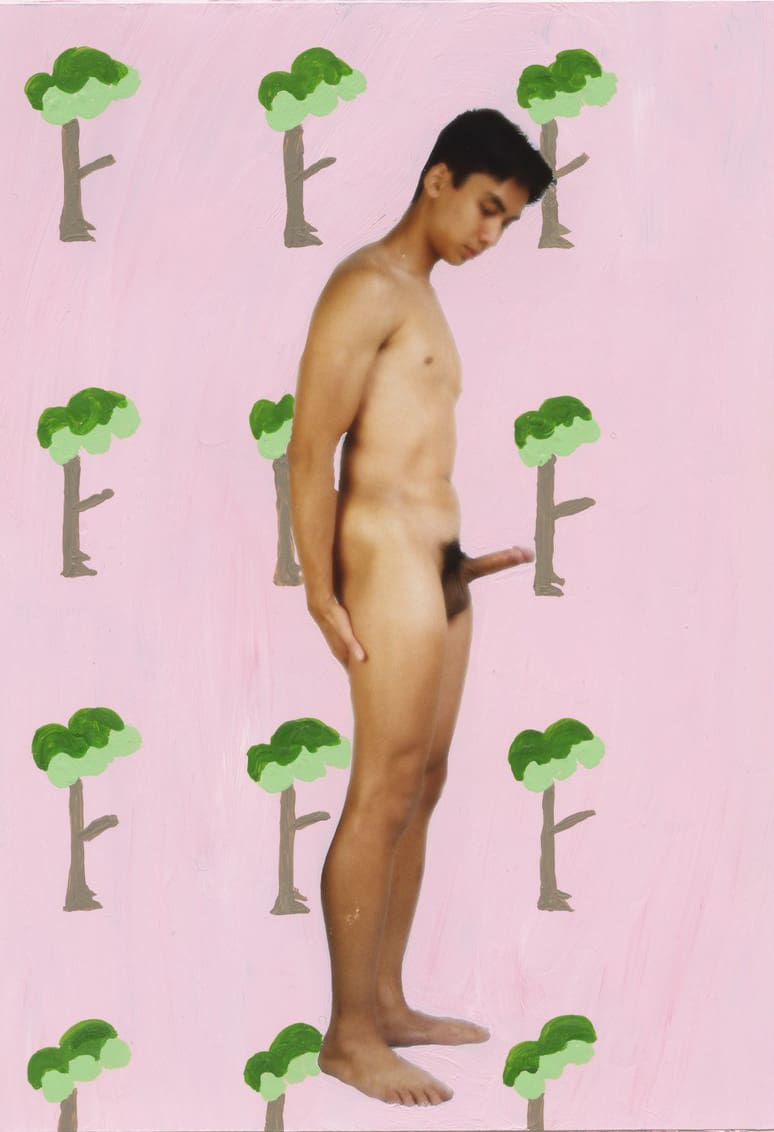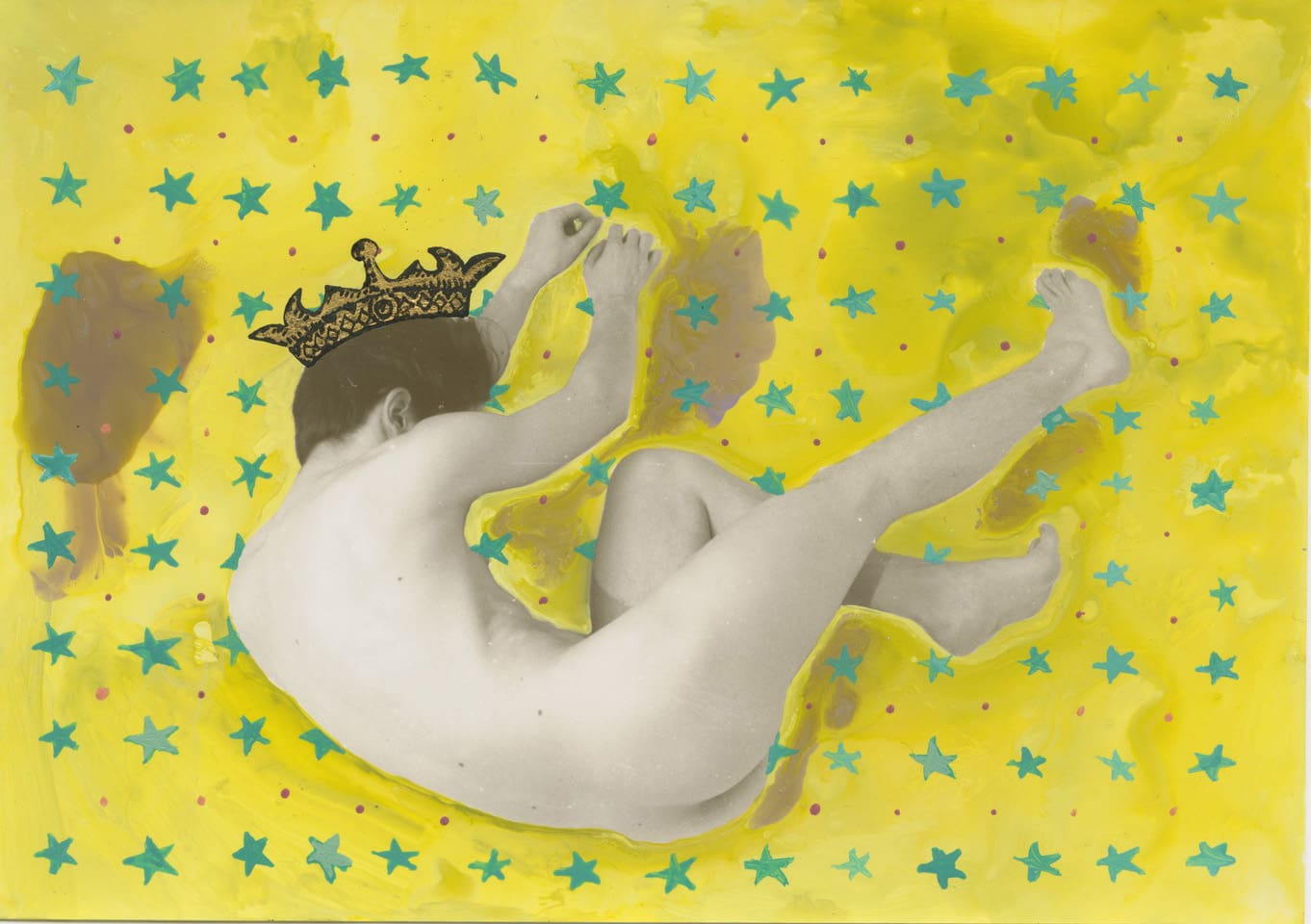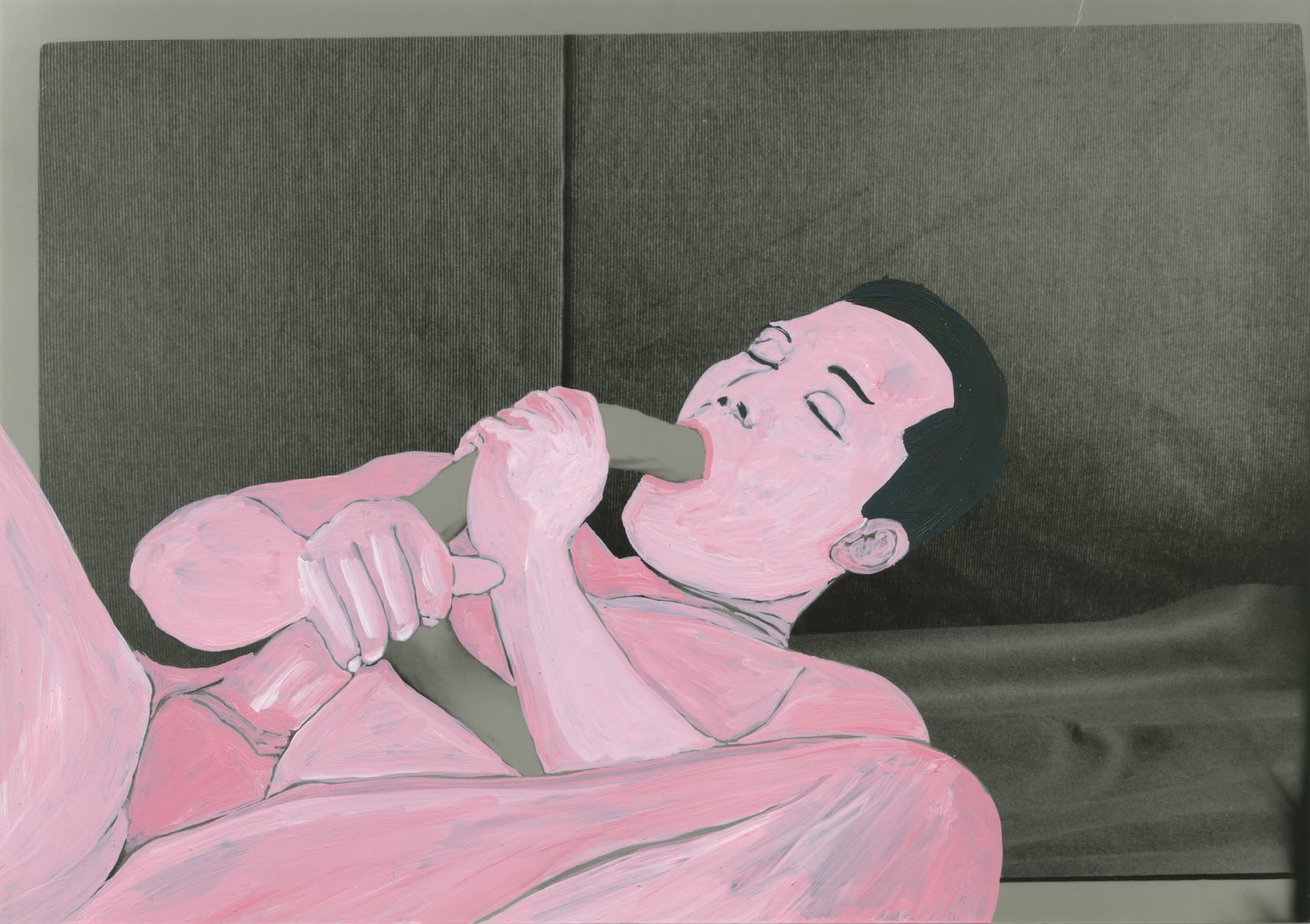
There is a word I keep returning to: photograffiate — photographs that have been written on, drawn over, claimed. Not in the vandal’s sense, though the impulse isn’t entirely different. The graffiti writer treats the wall as a surface waiting to be inhabited. I did something similar, but the surface was photographic paper — and the claim I was making was stranger, more private, and (looking at the titles now) considerably more sardonic.

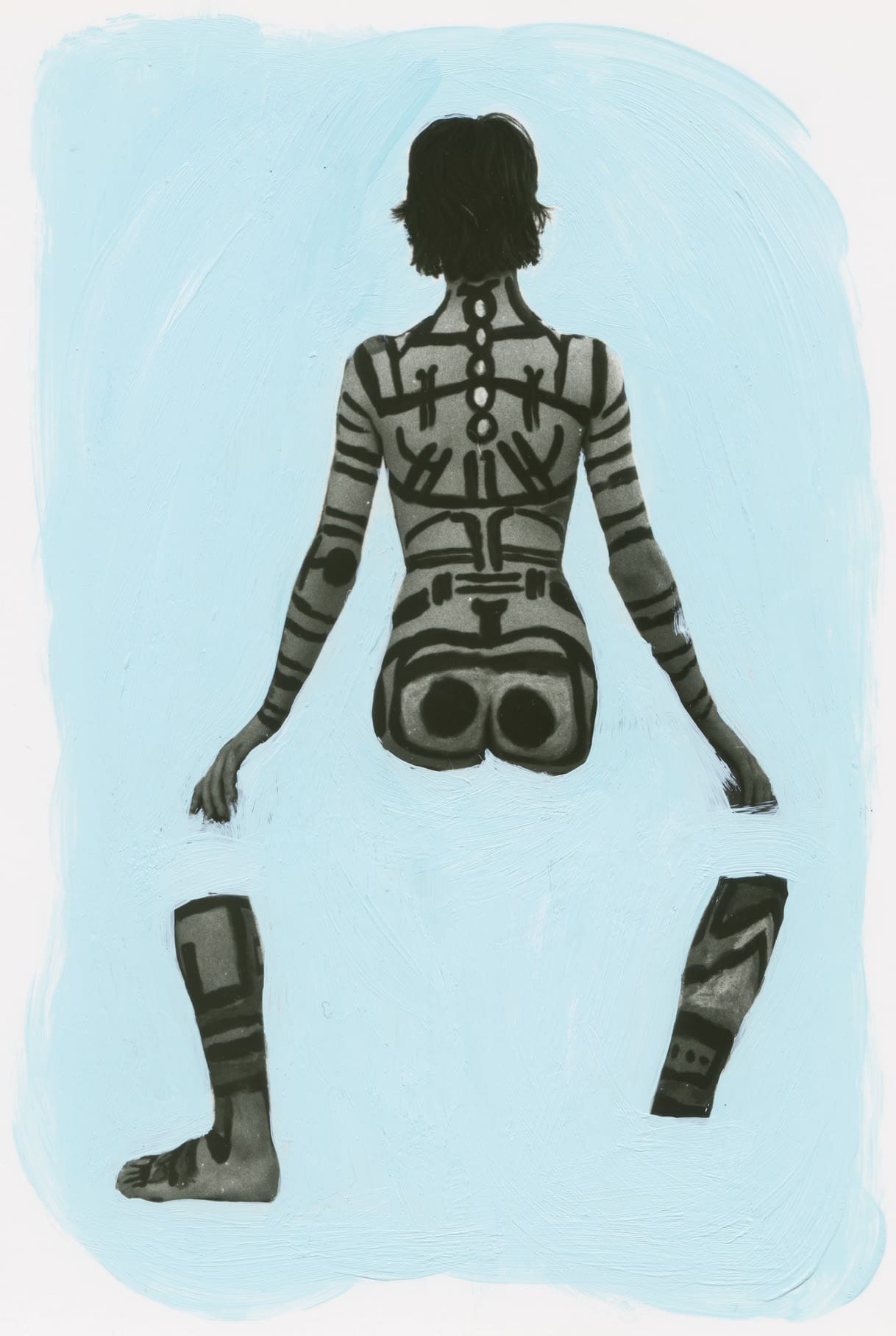

Between 1989 and 1994, working in darkrooms in Italy and in the United States, I made silver gelatin prints and then brought them back into daylight and painted over them with acrylics. Not to improve in any cosmetic sense. I was looking for a third thing — neither inside the photograph nor inside the painting, but in the friction between them.
What I understood about photography then — and what I’m not sure I’ve entirely abandoned — is that the photograph is not the destination. It’s a starting point. A substrate. A surface with memory already embedded in it: silver crystals exposed to actual light, actual bodies, actual rooms. That memory is fixed but not final. You can do things to it. You can push back.
I was also photocopying prints in that period. Running them through machines not designed for them, degrading the tonal range, flattening the grays into something rawer and more graphic. There’s a continuity between that impulse and the painting: both are forms of interference. Both take the photograph out of its presumed authority — its claim to have captured something — and treat it instead as raw material for a different kind of meaning-making.
The acrylic went on in layers. Sometimes it obscured the photographic image almost entirely; sometimes it only touched the edges, a border of color that changed how you read the center. Color on black-and-white creates a cognitive dissonance I find difficult to explain but easy to recognize: the photograph recedes into document while the paint surges forward into gesture, and the tension between those two modes of seeing is precisely what I was after.
The titles tell you something about the mood: Un Polletto (Are You Chickening Out?), Una Faccia come il Culo, Un Sebastiano, Un Illuminato — the sardonic and the genuinely felt sitting side by side without embarrassment. And then there is Un Cullano, a word that doesn’t exist in Italian. It came from a session in New York with a model I’d recruited at a gay club, who arrived less interested in what I had in mind and more intent on doing something — his word, repeated — extreme. The title plays on collana, necklace, because at a certain point he insisted on inserting one somewhere a necklace doesn’t typically go. The photograph got made. The word got invented. That’s how some titles happen.
I no longer paint over prints. I intervene digitally now and then — less often, with less attachment. The brush had a physicality the mouse can’t replicate, and I haven’t found its equivalent. But there are periods when certain tools belong to you completely, and others when the relationship is looser. These works are from the first kind. You can feel it.